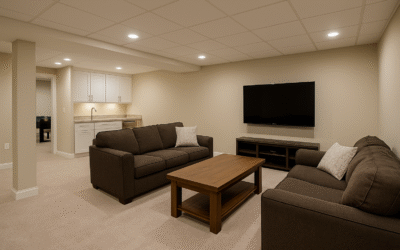

Paint has a major visual impact, but it is also one of the easiest finish elements to change later. That makes it useful to select paint in relation to the more permanent materials being installed during a remodel.
Start with the existing conditions
Flooring often covers the largest surface after the walls and can introduce warm, cool, or neutral undertones. Cabinetry, tile, stone, and other fixed finishes add their own colors and patterns.
Plan for everyday use
Lighting changes how those colors appear. A sample that looks one way in a store can feel different under the natural and artificial light in the actual room.
Coordinate the construction details
Adjoining spaces matter in open floor plans. Colors do not have to be identical, but the transition should make sense when several rooms are visible at the same time.
Think beyond the visible finish
Trim and ceiling colors are part of the palette as well. Existing woodwork or painted trim may influence whether a new wall color feels connected to the rest of the house.
Bring the project together
Interior remodeling decisions are easier to coordinate when paint is chosen after the major fixed materials are established, allowing color to bring the finished elements together rather than compete with them.
For homeowners in Belleville and the Metro-East considering interior remodeling, Loughman Builders & Remodelers can help evaluate the work as part of the existing home. Browse the project portfolio, read customer reviews, or contact Loughman Builders & Remodelers to discuss a project.