A sump pump may operate quietly for long periods and then become critical during a heavy storm. That makes it worth thinking about what happens if power is interrupted, the primary pump cannot keep up, or a component fails.
Understand the existing conditions
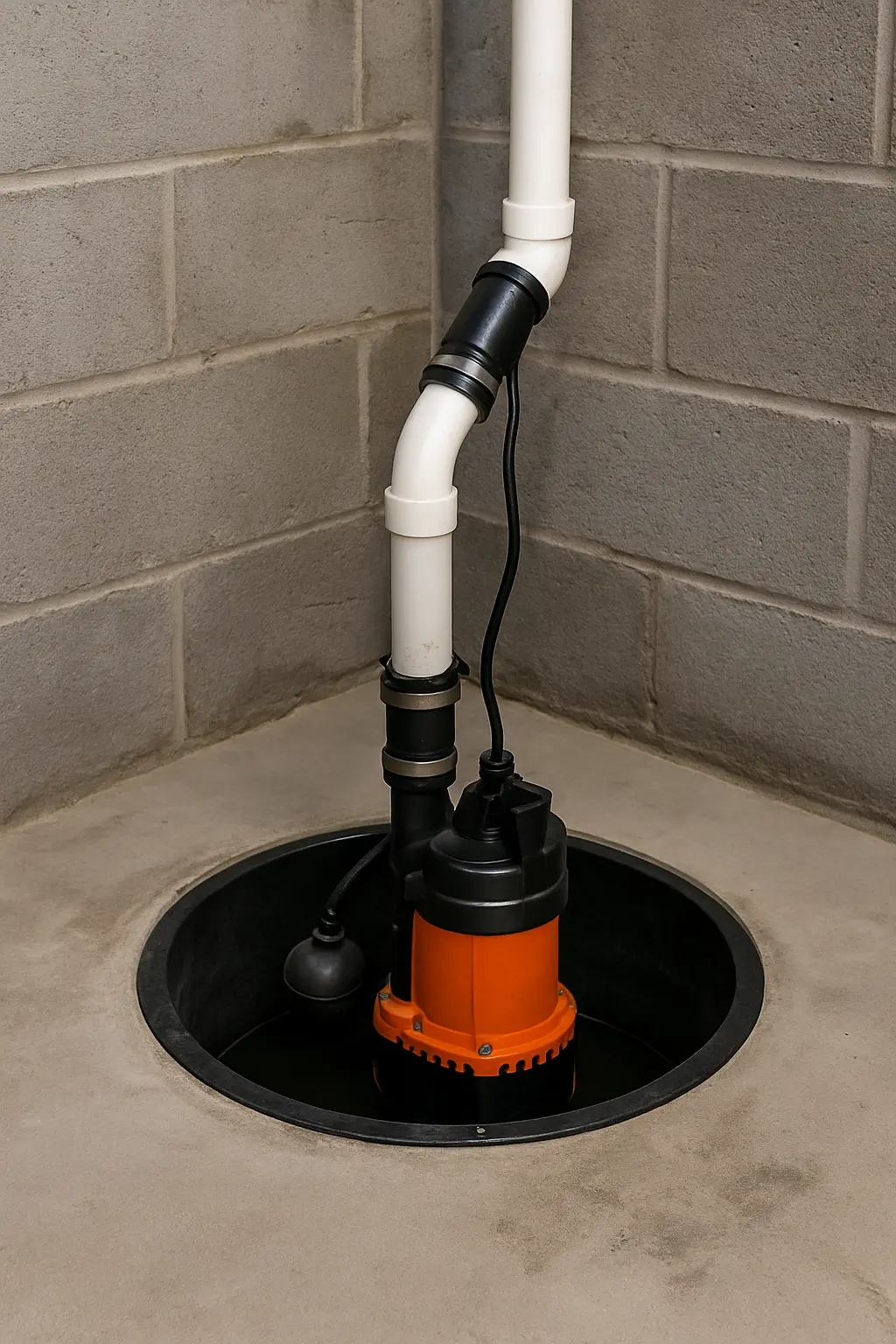
The first step is understanding the existing setup. Homeowners should know where the pit is, how the pump is powered, where the discharge goes, and whether the system has any existing backup provisions.
Plan around everyday use
Access is important because equipment that cannot be reached easily is harder to inspect or service. Finished basement plans should preserve practical access to the pit and related piping.
Coordinate the construction details
Discharge conditions matter during high water events as well. A pump cannot solve the problem effectively if the discharge route is blocked or returns water toward the foundation.
Keep future service in mind
Backup options vary by property and system, so they should be considered in the context of the actual drainage conditions rather than selected only from a product label.
Make the finished work feel intentional
Pump and drainage planning is strongest when homeowners understand both normal operation and what the system is expected to do when conditions become less normal.
For homeowners in Belleville and the Metro-East considering pump and drainage services, Loughman Builders & Remodelers can help evaluate the work in the context of the existing home. Browse the project portfolio, see customer reviews, or contact Loughman Builders & Remodelers to discuss a project.