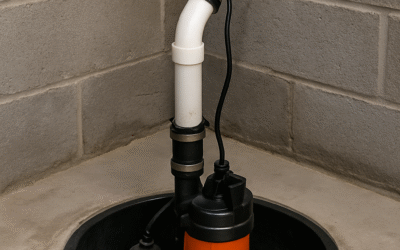

A sump pump has one basic job: move collected water away from the basement. But pumping water out of the pit is only half of the system. The discharge route has to carry that water to an appropriate location without simply sending it back toward the foundation.
Start with the existing conditions
Homeowners should pay attention to where the line exits the house and what happens beyond that point. A damaged, disconnected, blocked, or poorly positioned discharge can reduce the effectiveness of an otherwise working pump.
Plan around daily use
Grade matters because water naturally follows the easiest path. If the discharge ends in an area that slopes back toward the house, some of that water may return to the foundation. Saturated areas can also create muddy spots or erosion.
Coordinate the hidden work
Seasonal conditions matter too. Exterior sections can be affected by debris, movement, freezing conditions, or yard work. The route should be practical to inspect rather than disappearing into an arrangement nobody can evaluate.
Keep future service in mind
Inside the basement, the discharge piping should remain secure and coordinated with the pump, check valve, and access to the pit. New basement finishes should not make these components unnecessarily difficult to reach.
Make the finished result feel intentional
Pump and drainage planning works best when the entire water path is considered—from where water enters the system to where it is safely discharged.
For homeowners considering pump and drainage services in Belleville and the Metro-East, Loughman Builders & Remodelers can help evaluate the project as a complete system rather than a collection of isolated finish choices. You can also review the project portfolio and contact Loughman Builders & Remodelers to discuss the work.