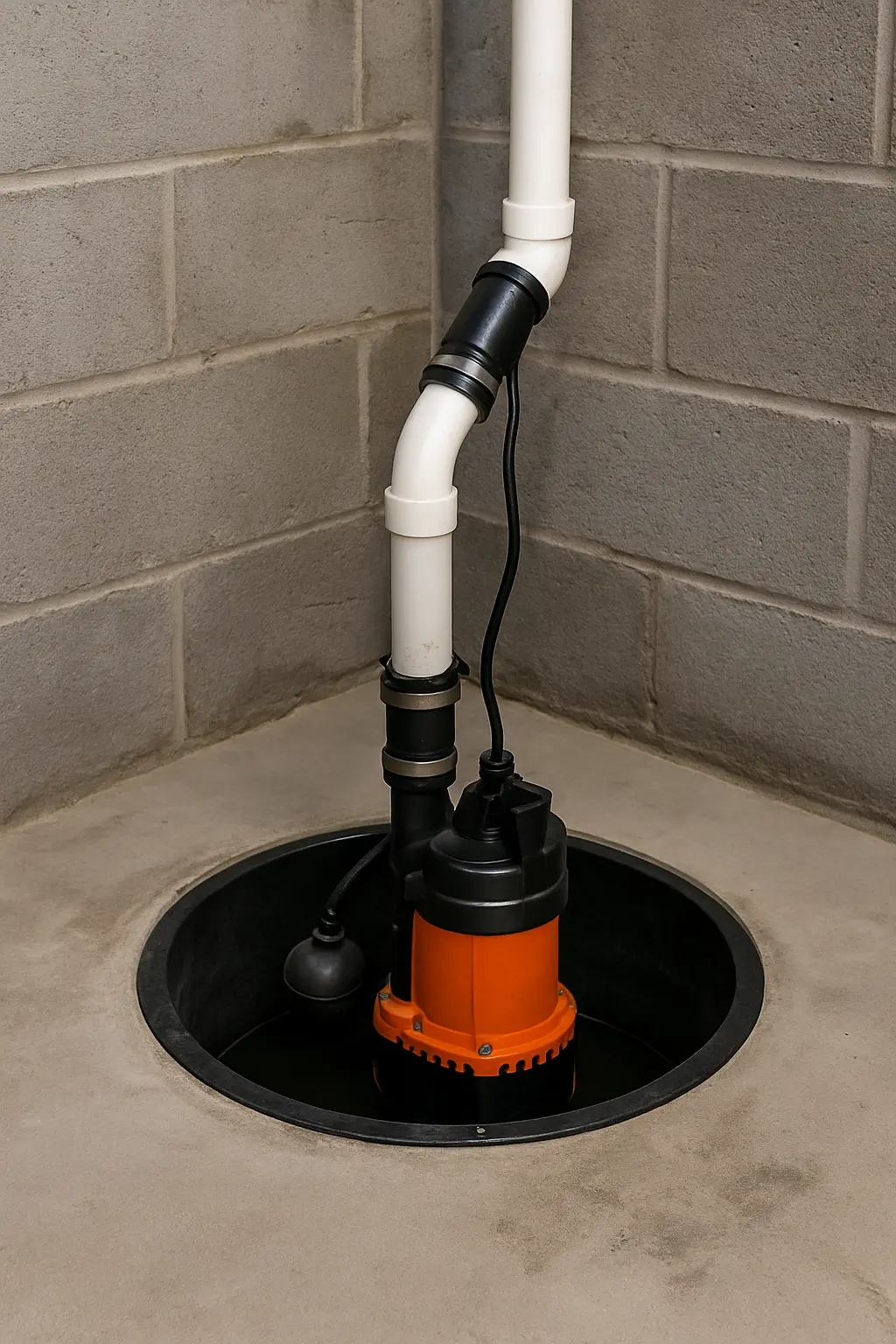
A sump pump can run normally while a problem develops farther down the discharge line. Because much of the route may be outside or out of sight, homeowners may not notice an issue until water movement becomes more difficult.
Start with the existing conditions
The line should remain connected and supported where it leaves the pump and travels through the house. Loose fittings or movement can create leaks in places where water is not supposed to be released.
Plan for everyday use
Outside, the termination point deserves attention. Yard work, soil movement, debris, or changes to landscaping can alter the route or block the outlet.
Coordinate the construction details
The discharge should also send water to a location that does not immediately encourage it to return toward the foundation. Grade and surface drainage influence what happens after the pump has done its job.
Think beyond the visible finish
Cold-weather conditions can affect exposed sections in some installations, so the route should be understood rather than forgotten once it leaves the basement wall.
Bring the project together
Pump and drainage systems work as complete paths. Periodically looking beyond the pump itself can help identify simple discharge concerns before they interfere with the system during wet conditions.
For homeowners in Belleville and the Metro-East considering pump and drainage services, Loughman Builders & Remodelers can help evaluate the work as part of the existing home. Browse the project portfolio, read customer reviews, or contact Loughman Builders & Remodelers to discuss a project.