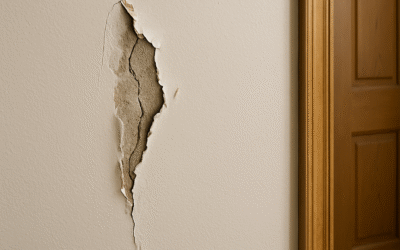

Many home repairs really are small. A loose piece of trim, damaged drywall, or worn section of flooring may need nothing more than a straightforward repair. The important distinction is whether the damage is isolated or keeps returning.
Start with the existing conditions
A recurring drywall crack, for example, should not automatically be covered with another coat of compound. Its location, direction, and history matter. The same is true for doors that suddenly begin sticking or gaps that continue to reopen after cosmetic repairs.
Plan around daily use
Water stains deserve similar attention. The visible mark may be several feet from the actual source because water can travel along framing or other materials before it appears. Repairing the stain without understanding the source can leave the underlying problem active.
Coordinate the hidden work
Soft flooring around bathrooms, kitchens, doors, or exterior walls can also indicate more than surface wear. The condition underneath should be understood before new finish material covers it.
Keep future service in mind
Exterior repairs can provide clues as well. Failed caulk, damaged trim, loose siding, or deteriorated areas around openings may allow repeated moisture exposure. Fixing the entry point is more useful than repeatedly repairing interior symptoms.
Make the finished result feel intentional
Professional home repair work should solve the actual condition whenever possible, not simply make the evidence disappear.
For homeowners considering home repair in Belleville and the Metro-East, Loughman Builders & Remodelers can help evaluate the project as a complete system rather than a collection of isolated finish choices. You can also review the project portfolio and contact Loughman Builders & Remodelers to discuss the work.