

A roof is one of those parts of a house that is easy to stop noticing when it is doing its job.
The problem is that roof failure rarely stays on the roof. Water can move into sheathing, framing, insulation, ceilings, and walls before a homeowner sees the full extent of the damage inside.
Do Not Judge a Roof From the Ground Alone
Missing shingles are obvious, but roof problems can also show up as curling, worn surfaces, damaged flashing, repeated leaks, staining, or sections that have simply reached the end of their useful life.
A roof evaluation should consider the larger system rather than one visible shingle. The condition of roof penetrations, valleys, flashing, edges, and the deck below can all matter.
Small Leaks Can Cause Expensive Interior Damage
Water does not always drip straight down from the point where it enters. It can travel along framing or roof decking before appearing inside the home.
That means a stain on a ceiling may not be directly below the source. By the time water becomes visible in a finished room, insulation or wood may already be wet.
Replacement Protects the Work Below
If a homeowner is investing in interior remodeling, it makes little sense to ignore active roof problems above that finished space.
The shell of the home has to protect the renovation. New drywall, paint, cabinets, flooring, or finished basement space can all be damaged if water continues to enter from above.
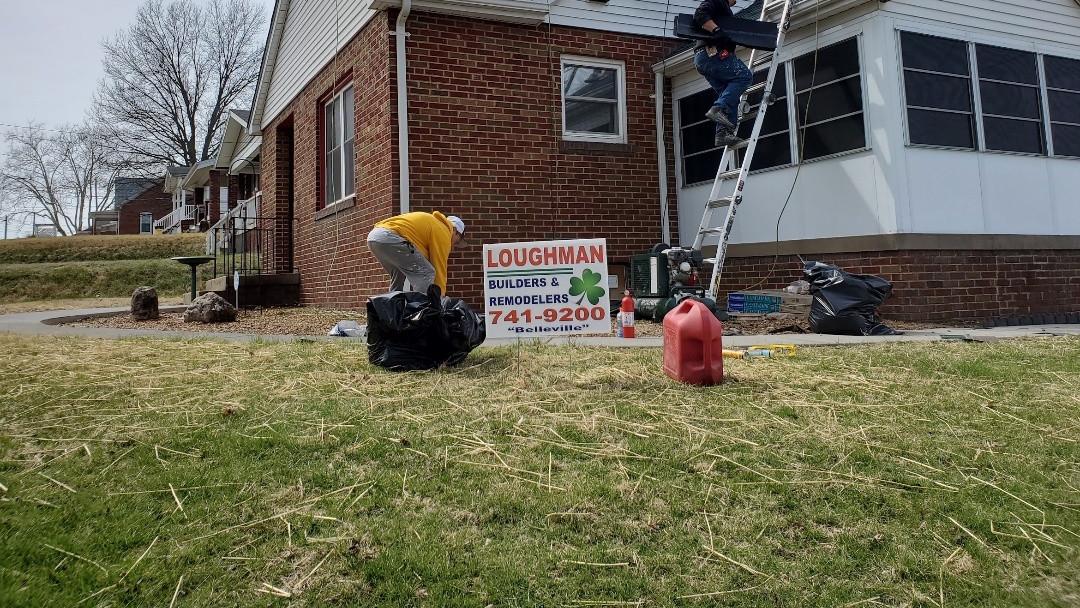
Loughman Builders & Remodelers handles a range of home repairs and construction work across Belleville and the Metro-East. Exterior maintenance and interior improvement often connect more closely than homeowners expect.
Roofing Work Should Address the Details
Shingles are the visible layer, but good roof work also depends on proper underlayment, flashing, ventilation considerations, penetrations, edges, and the condition of the roof deck below.
If damaged wood or other problems are uncovered during removal, those conditions should be addressed before the new finished layer goes back on.
Ventilation and Moisture Are Part of Roof Performance
Attic conditions can affect the life of a roof. Heat and moisture that become trapped in the attic can contribute to problems in the roof system and in the house below.
Roof work should therefore be viewed as part of the building envelope rather than only a surface replacement.
Timing Matters
Waiting for water to drip through a ceiling is one way to discover a roof problem, but it is not the best one.
If the roof is showing widespread age, damage, repeated leak history, or significant wear, dealing with it earlier can help protect the rest of the home and give the homeowner more time to plan the work instead of reacting to an emergency.
Interior Clues Can Point to Exterior Problems
Homeowners sometimes notice roof trouble first inside the house. Ceiling stains, peeling paint near an upper wall, damp attic insulation, or a musty smell after heavy rain can all justify a closer look.
These signs do not automatically prove that the roof needs full replacement, but they should not be ignored. The source needs to be identified before interior finishes are repaired.
Roof Work and Remodeling Should Be Coordinated
If major interior work is planned, it is smart to address known water-entry problems first. Otherwise, newly finished ceilings and walls may be exposed to the same leak that damaged the old ones.
Likewise, if an addition changes the roofline, the roofing plan should be coordinated with the new construction rather than treated as a separate afterthought.
Protect the House Before the Leak Gets Expensive
The roof protects nearly every improvement underneath it. Kitchens, bathrooms, additions, flooring, finished basements, insulation, electrical systems, and framing all depend on the exterior shell staying dry.
Browse Loughman’s project portfolio for examples of completed work, or contact Loughman Builders & Remodelers to discuss the condition of your home and the improvements it needs.