

Before-and-after photos are popular because the change is easy to understand. An old driveway becomes a clean new surface. A dated shower becomes easier to use. A rough kitchenette becomes a finished room.
But the two photos leave out the part that often matters most: everything that happened between them.
The Middle of the Project Shows the Process
Demolition, tear-out, excavation, framing, preparation, repair, rough plumbing, electrical work, and structural corrections are not as glamorous as the finished photo.
They are also where many of the decisions that determine quality actually happen.
Loughman Builders & Remodelers maintains an Our Work portfolio so homeowners can see real project examples rather than only polished sales graphics.
Preparation Is Part of the Finished Result
Concrete work depends on what happens before the final surface is finished. Remodeling depends on what is behind the wall. Decks depend on framing and connections below the boards. A room addition depends on structure, layout, and integration with the existing house.
That is why homeowners should ask more than, “Will it look good?”
A stronger question is, “What work has to happen so it stays good?”
Before Photos Show the Problem
A useful before photo gives context. It can show broken concrete, an outdated bathroom, poor access, damaged framing, or a cramped layout.
The important part is understanding what the project is supposed to improve. Without that context, a finished photo may look attractive without showing whether the original problem was actually solved.
During Photos Show What Was Required
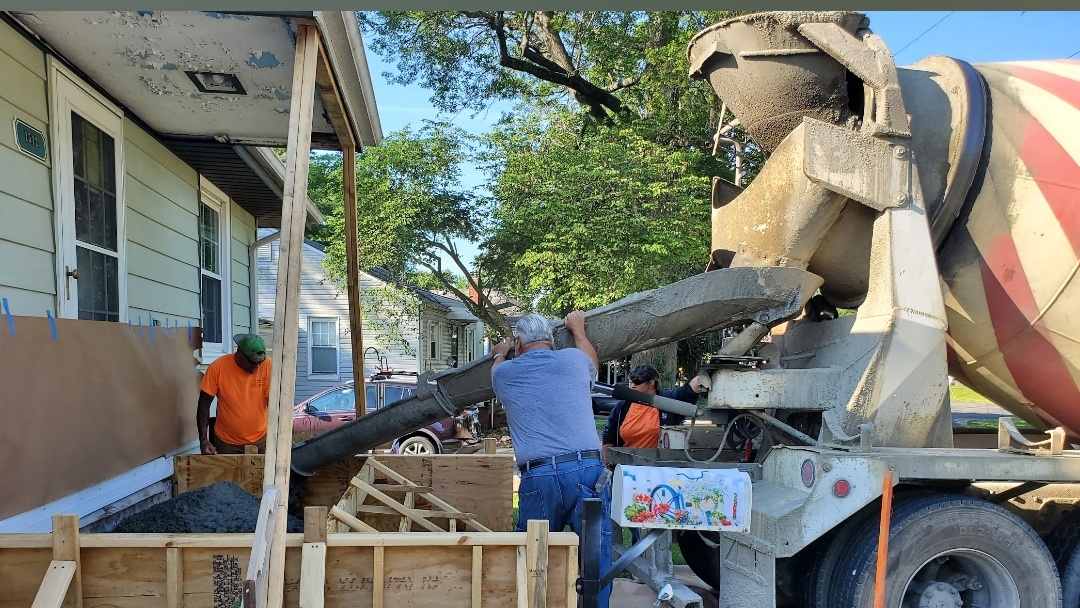
Project photos taken during construction can reveal tear-out, base preparation, framing, rebuilding, or other steps that disappear once the job is complete.
Those images are valuable because much of good construction eventually becomes invisible.
After Photos Show the Finish, Not the Whole Story
The finished result still matters. Clean lines, neat transitions, straight surfaces, proper fit, and a layout that feels intentional are all part of workmanship.
But the after photo is only the last chapter. The work behind the surface is what supports it.
Look for Projects Similar to Yours
A contractor does not need to have photographed every exact project type, but relevant examples are useful.
If you are planning a deck, a room addition, or a kitchen or bathroom remodel, look for work that involves similar construction challenges.
Ask What Happened Between the Photos
A good project conversation can include questions such as:
- What had to be removed?
- Was hidden damage found?
- What preparation was required?
- Did the layout change?
- What structural work was involved?
- How were transitions to the existing home handled?
- What materials were selected and why?
Those questions tell you much more than simply asking which paint color or tile was used.
Communication During the Job Matters
Construction is a process. Homeowners should understand what stage the project is in, what has been discovered, and what comes next.
That does not mean every project will be perfectly predictable. Existing homes sometimes reveal conditions that cannot be seen before demolition. Clear communication helps homeowners understand why the plan may need to adjust.
Real Project Photos Help Set Better Expectations
Professional marketing photos are useful, but real jobsite images often give homeowners a better sense of scale, process, and the kind of work involved.
A photo of framing, removed concrete, or an unfinished wall may not be glamorous, but it shows that construction is a sequence of steps rather than an instant transformation.
Use Photos to Ask Better Questions, Not to Copy a Project Exactly
Two homes can have similar-looking bathrooms or decks and still require very different work because the structure, age, layout, access, and existing conditions are different.
Project photos should inspire a conversation rather than create the expectation that another house will follow the exact same path. The useful question is not “Can you copy this?” but “What would it take to solve the same kind of problem at my home?”
Use the Portfolio to Start a Real Conversation
If you see a Loughman project that is similar to something you are considering, use it as a starting point. Ask what would be different at your home, what conditions need to be evaluated, and what options make sense for your property.
Contact Loughman Builders & Remodelers to discuss your project in Belleville or the surrounding Metro-East and build a plan around the work your home actually needs.