
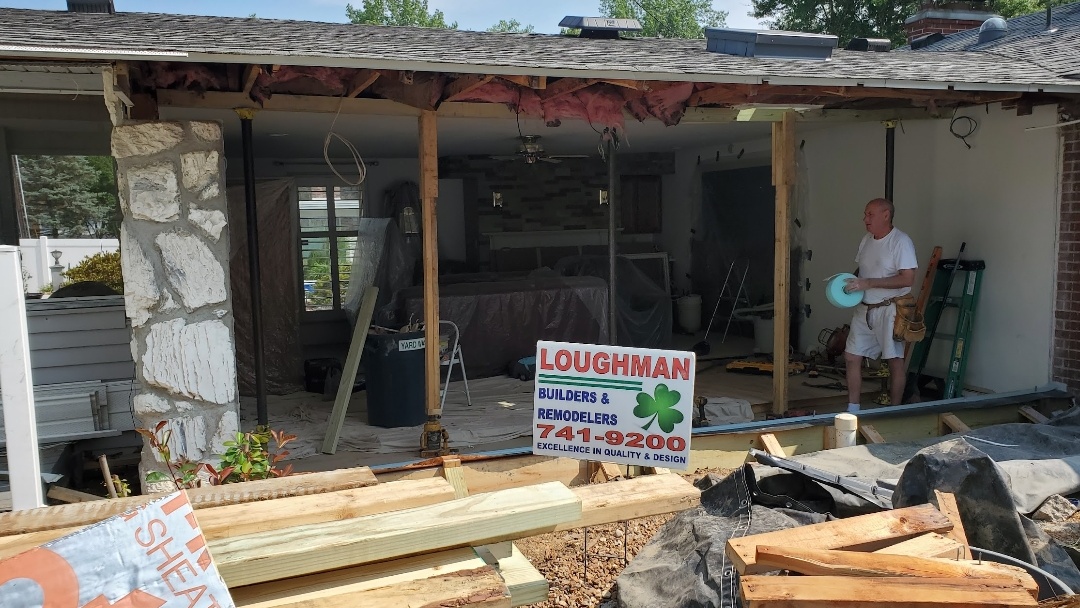

One of the realities of remodeling an existing home is that the full condition of the structure is not always visible on day one.
Walls can look normal from the room side while damaged framing, moisture problems, old insect activity, or previous repairs remain hidden behind drywall and trim. Once demolition begins, the project may reveal conditions that need to be handled before the planned finish work can continue.
Cosmetic Work Cannot Cover a Structural Problem
If termite damage has weakened framing, the affected material needs to be evaluated and repaired before the wall is closed back up. Painting, patching, or installing new finishes over compromised wood does not solve the underlying issue.
Loughman Builders & Remodelers handles home repair services along with larger remodeling projects in Belleville and the Metro-East. That combination matters when a renovation uncovers something that needs more than a cosmetic fix.
Hidden Damage Can Change the Scope of a Remodel
A homeowner may begin with plans for a family room update and discover that framing behind the wall needs attention. That can affect schedule, materials, and the order of work.
It is frustrating, but discovering the problem during demolition is better than covering it again and leaving damaged material in place.
Finding Damage Does Not Automatically Mean the Whole Project Is Lost
Unexpected conditions do not always mean a remodel has to stop completely. The key is to identify how far the damage extends, remove compromised material where necessary, rebuild sound support, and then restore the finished surfaces.
This type of repair may also affect electrical wiring, plumbing, insulation, trim, flooring, or adjoining walls depending on where the damage is located.
The Cause Matters Too
Repairing damaged framing is only part of the conversation. Homeowners also need to understand whether the condition that caused the damage is still active.
Termite treatment itself should be handled by the appropriate pest-control professional. Remodeling and repair work then addresses the damaged construction after the pest issue has been dealt with.
Moisture conditions can also contribute to wood deterioration, so water sources, drainage, leaks, or other contributing conditions may need attention depending on what is found.
Why Remodeling Experience Matters in Repair Work
Structural repair rarely ends with the framing itself. The repaired area eventually has to blend back into the surrounding room.
That means thinking about wall surfaces, trim, flooring transitions, paint, ceilings, and any built-in features that were removed during demolition. The hidden structure and the visible finish are two parts of the same project.
For homeowners already planning interior remodeling, it is worth understanding that older homes can contain surprises once walls are opened. A realistic project plan leaves room to address legitimate hidden conditions instead of pretending they do not exist.
Signs That Deserve a Closer Look
- Soft or crumbling wood
- Visible insect channels or damaged framing
- Walls or trim that seem loose or distorted
- Evidence of past moisture around the damaged area
- Previous repairs that do not appear structurally complete
Not every damaged-looking wall means termite activity, and not every old repair is a problem. The point is to investigate when the condition suggests something is happening behind the finished surface.
Why Documentation During a Repair Can Be Useful
When damaged framing is opened and repaired, photographs of the work in progress can help document what was found and what was rebuilt before the wall is closed again.
This does not replace professional evaluation or treatment where needed, but it gives the homeowner a clearer record of a part of the project that will eventually be hidden.
Do Not Rush to Close the Wall
Once damaged material has been removed, the open wall provides access to areas that may also need attention. Insulation, wiring, plumbing, or moisture conditions may be easier to inspect at that stage.
Closing the wall quickly may feel like progress, but the better approach is to make sure the hidden work is complete before the finish layers go back on.
Fix What the House Needs, Then Finish the Room
The goal is not simply to make the wall look new again. It is to leave the underlying construction in better condition and then rebuild the room cleanly around that repair.
You can see examples of Loughman’s project work or contact Loughman Builders & Remodelers if you have visible damage or are planning a remodel where hidden problems may be a concern.